
Choosing the right knife can feel overwhelming, especially with so many blade styles, steel types, and handle materials available. Whether you are searching for a pocket knife, chef knife, Bowie knife, or collectible blade, understanding the fundamentals will help you make the right decision.
In this complete guide, we break down everything you need to know before buying a knife — from blade types to steel quality and maintenance.
1. Understand Your Purpose
Before selecting a knife, determine how you plan to use it.
Everyday Carry (EDC)
If you need a knife for daily tasks such as opening packages or small cutting jobs, a compact folding pocket knife is ideal. Look for:
- Lightweight design
- Secure locking mechanism
- Durable steel with good edge retention
Kitchen & Culinary Use
For cooking, you need precision and balance. A chef knife or kitchen knife set offers versatility for slicing, chopping, and dicing. Key features include:
- Sharp edge geometry
- Balanced weight distribution
- Comfortable ergonomic handle
Outdoor & Heavy-Duty Use
For outdoor activities or demanding cutting tasks, a fixed-blade knife or axe provides strength and reliability. Look for:
- Full tang construction
- Forged steel durability
- Solid grip materials
Collecting & Display
Collectors often prioritize craftsmanship, blade finish, and design. Damascus steel knives and swords are popular due to their distinctive layered patterns and premium aesthetic.
2. Blade Types Explained
Understanding blade shapes helps match the knife to your intended use.
Drop Point Blade
- Versatile and strong
- Ideal for everyday carry
- Excellent control
Clip Point Blade
- Sharp tip for precision tasks
- Common in Bowie knives
Straight Edge Blade
- Best for clean slicing
- Ideal for kitchen knives
Tanto Blade
- Strong tip for piercing tasks
- Popular in tactical-style knives
Each blade style affects performance, control, and durability.
3. Steel Matters: Why Forged Steel Is Important
The steel composition determines:
- Edge retention
- Corrosion resistance
- Strength
- Overall lifespan
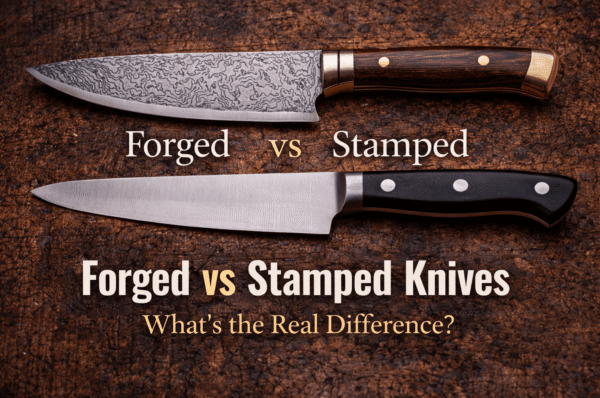
Forged steel blades are crafted through a process that enhances structural integrity. This results in stronger blades compared to stamped alternatives.
Damascus Steel
Damascus steel features layered construction that creates unique wave-like patterns. Beyond aesthetics, layered steel enhances strength and resilience. No two Damascus blades are identical, making them popular for collectors.
4. Handle Material & Comfort
A knife is only as good as its grip.
Common handle materials include:
- Wood – Classic and stylish
- Micarta – Durable and moisture-resistant
- G10 – Lightweight and strong
- Stainless steel – Modern and robust
Look for handles that:
- Provide secure grip
- Feel balanced in hand
- Reduce fatigue during extended use
5. Balance & Weight
A well-balanced knife improves control and precision. When holding a knife:
- The weight should not feel blade-heavy
- Grip should feel natural
- Cutting motion should feel controlled
Premium knives are engineered for balanced distribution between blade and handle.
6. Fixed Blade vs Folding Knife
Folding Knife
- Compact
- Easy to carry
- Ideal for daily utility
Fixed Blade Knife
- Stronger construction
- Better for heavy-duty tasks
- Often preferred for outdoor use
Your choice depends on portability vs strength requirements.
7. Maintenance & Care
Proper maintenance extends the life of your knife.
- Keep blades clean and dry
- Store in a dry environment
- Apply light oil for long-term storage
- Sharpen using proper tools
Regular care ensures long-lasting performance and safety.
Final Thoughts: Choose Quality Over Trend
When selecting a knife, prioritize:
- Forged steel construction
- Proper balance
- Comfortable grip
- Intended purpose
A well-crafted knife is an investment in performance, durability, and craftsmanship.
At Forgixa, we focus on premium forged steel knives, swords, axes, and Damascus designs built for strength and precision.